manual jack
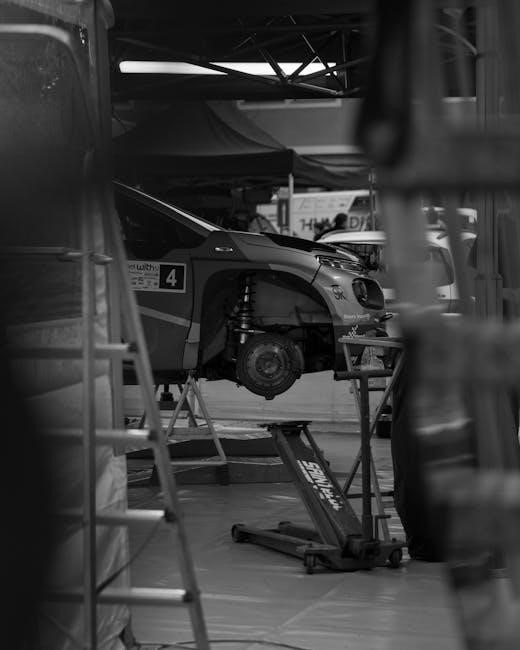
Manual Jacks: A Comprehensive Guide
Manual jacks‚ essential tools for lifting heavy loads‚ come in diverse types – mechanical‚ bottle‚ and floor – offering solutions for automotive‚ construction‚ and industrial needs;
Manual jacks represent a cornerstone of lifting technology‚ relied upon across numerous sectors for their simplicity and reliability. These tools‚ operated by human power‚ provide a safe and controlled method for raising heavy objects. From routine vehicle maintenance to complex construction projects‚ manual jacks offer a versatile solution where powered systems are impractical or unavailable.
Understanding the different types – mechanical screw jacks‚ hydraulic bottle jacks‚ and hydraulic floor jacks – is crucial for selecting the appropriate tool for a specific task. Prioritizing safety‚ through proper usage and maintenance‚ ensures effective and secure lifting operations.
What is a Manual Jack?
A manual jack is a mechanical device utilized to lift or raise heavy loads using manual force. Unlike hydraulic or electric jacks‚ it doesn’t rely on external power sources. These tools convert human effort into lifting power‚ employing either a screw mechanism or hydraulic principles.
They are fundamentally hand-held devices designed for specific purposes‚ ranging from 60 to 100 tons capacity in heavy-duty industrial applications. Regular inspection and proper fluid maintenance are vital for safe and efficient operation‚ preventing damage and upholding warranty validity.
Types of Manual Jacks
Manual jacks broadly fall into three primary categories. Mechanical screw jacks utilize a threaded screw to lift loads‚ offering precise control. Hydraulic bottle jacks employ a hydraulic cylinder for substantial lifting force in a compact design.
Hydraulic floor jacks‚ commonly found in automotive shops‚ combine a long handle and hydraulic system for efficient lifting. High-level industrial quality jacks‚ available with electric or manual pumps‚ can reach capacities of 60-100 tons‚ sometimes with remote control functionality.
Mechanical Screw Jacks
Mechanical screw jacks are renowned for their precision and controlled lifting capabilities. They operate on a simple yet effective principle: a threaded screw raises or lowers a load with each rotation.
These jacks are ideal for applications requiring incremental adjustments and stable positioning. While requiring more manual effort than hydraulic options‚ they offer inherent safety due to their mechanical locking mechanism‚ preventing sudden drops when properly used.
Hydraulic Bottle Jacks
Hydraulic bottle jacks utilize Pascal’s principle to generate substantial lifting force through a small pumping action. These jacks are compact and capable of lifting heavy loads‚ making them popular for automotive repair and various industrial tasks.
Their design features a vertical cylinder containing hydraulic fluid‚ offering a stable lifting point. However‚ proper fluid maintenance is crucial to prevent damage and ensure optimal performance‚ avoiding warranty voidance.
Hydraulic Floor Jacks
Hydraulic floor jacks are widely used in automotive settings due to their efficiency and ease of use. They feature a long handle and a low-profile lifting saddle‚ allowing access under vehicles with limited ground clearance.
Compared to other jack types‚ hydraulic floor jacks generally offer greater lifting efficiency‚ reducing manual effort. They are ideal for repeated lifting‚ saving time and physical exertion‚ particularly in professional automotive environments.
How Manual Jacks Work
Manual jacks operate on fundamental mechanical or hydraulic principles. Screw jacks utilize a threaded rod to convert rotational motion into linear lifting force‚ requiring consistent manual effort. Conversely‚ hydraulic jacks leverage Pascal’s principle‚ employing fluid pressure to amplify force.
Applying force to a small piston creates pressure transmitted through an incompressible fluid to a larger piston‚ resulting in substantial lifting capability with reduced physical strain.
The Mechanics of Screw Jacks
Screw jacks function through a simple yet effective mechanical advantage. Rotating the jack’s handle turns a lead screw‚ which possesses a coarse thread. This rotation translates into a slow‚ controlled vertical movement of the lifting pad.
The mechanical advantage is determined by the screw’s pitch – the distance traveled per rotation. A smaller pitch yields greater lifting force but requires more rotations‚ demonstrating a trade-off between effort and speed.
The Hydraulics of Bottle and Floor Jacks
Hydraulic jacks‚ whether bottle or floor types‚ leverage Pascal’s principle. A manual pump forces hydraulic fluid through a cylinder‚ creating pressure. This pressure acts upon a piston‚ generating substantial lifting force.
Floor jacks utilize a longer handle for increased leverage‚ while bottle jacks offer a compact design. The fluid’s incompressibility ensures precise control and significant lifting capacity‚ making them ideal for heavier loads and efficient operation.
Applications of Manual Jacks
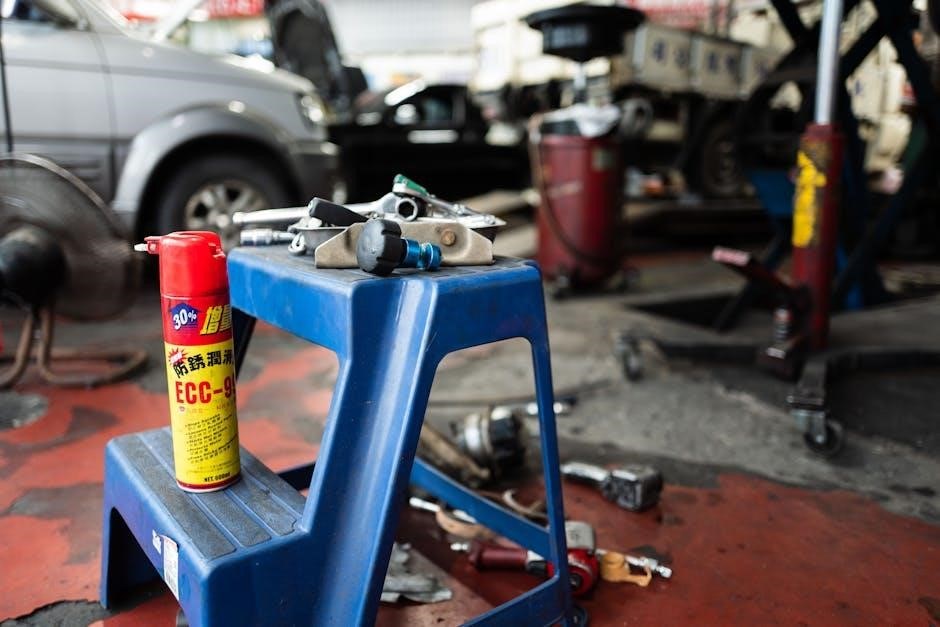
Manual jacks find widespread use across numerous sectors. In automotive repair‚ they facilitate tire changes and undercarriage work. Construction relies on them for lifting heavy machinery and leveling structures.
Industrial settings employ these jacks for maintenance and positioning equipment. High-capacity models‚ up to 100 tons‚ are available for demanding tasks‚ often with electric or remote control options‚ enhancing worker safety and efficiency.
Automotive Repair and Maintenance
Manual jacks are indispensable in automotive work‚ enabling tasks like tire rotations‚ brake servicing‚ and suspension repairs. They provide essential lift for accessing undercarriage components.
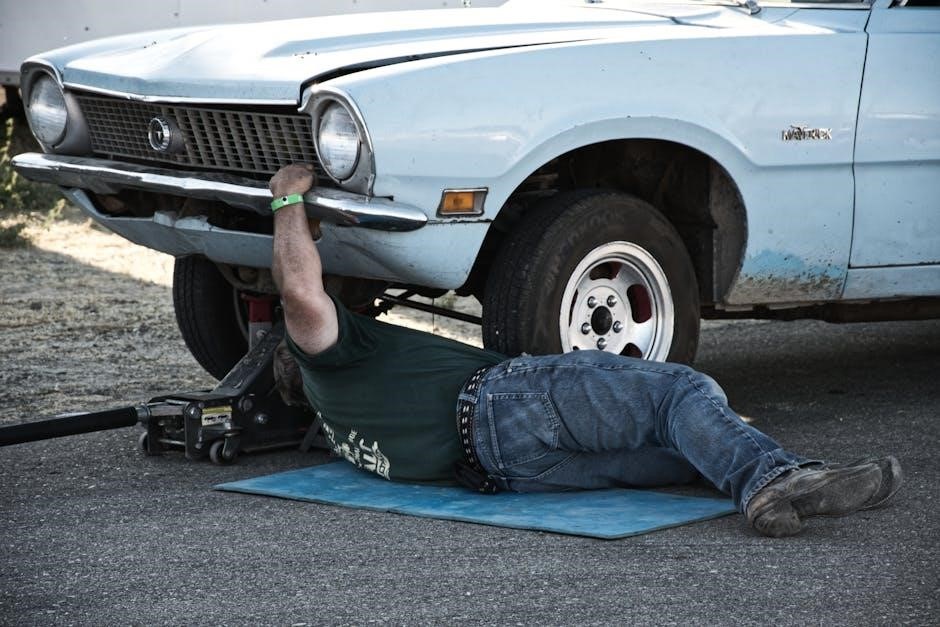
Prior to lifting‚ always ensure the vehicle’s parking brake is engaged and wheel chocks are in place for safety. Regular inspection of the jack itself is crucial‚ checking for any signs of damage or wear to prevent accidents during use.

Construction and Heavy Machinery Lifting
Manual jacks‚ particularly heavy-duty models with capacities up to 100 tons‚ are vital on construction sites for leveling machinery and assisting with equipment maintenance. Their robust construction ensures reliable performance under demanding conditions.
Remote-controlled options enhance safety by allowing operators to position loads from a distance. Always adhere to strict weight limits and utilize jack stands for secure support during prolonged work.
Industrial and Manufacturing Uses
Manual jacks play a crucial role in industrial settings‚ facilitating the precise positioning of heavy components during assembly and maintenance. High-quality‚ industrial-grade jacks ensure worker safety and operational efficiency.
Electric pump options and remote control systems further streamline processes‚ reducing manual effort and improving control. Regular inspection and proper fluid maintenance are essential for reliable‚ long-term performance.
Safety Precautions When Using Manual Jacks
Prioritizing safety is paramount when utilizing manual jacks. Always ensure the jack is positioned on a firm‚ level surface to prevent instability and potential rollovers. Never work under a load supported solely by a jack; always use appropriately rated jack stands for secure support.
Strictly adhere to the jack’s weight capacity‚ and regularly inspect for any signs of damage. Wheel chocks and engaged parking brakes are vital for added security.
Importance of a Level Surface
A level surface is critical for safe manual jack operation. Uneven ground significantly increases the risk of the jack shifting or tipping under load‚ potentially causing a catastrophic failure. This instability compromises the entire lifting process‚ endangering both personnel and the load itself.
Always verify the ground’s stability before commencing any lifting operation. Use leveling materials if necessary to create a solid‚ even base for the jack’s operation.
Using Jack Stands for Support
Never work under a vehicle or load solely supported by a manual jack. Jacks are designed for lifting‚ not sustained support. Always immediately place appropriately rated jack stands under the load once it reaches the desired height.
Ensure jack stands are securely positioned on a solid‚ level surface and are properly engaged with the vehicle’s designated support points. This redundancy is crucial for safety.
Never Exceeding Weight Capacity

Always adhere to the manual jack’s specified weight capacity. Exceeding this limit compromises the jack’s structural integrity and dramatically increases the risk of failure‚ potentially causing severe injury or damage.
Verify the weight of the load before lifting and select a jack with a sufficient safety margin. Regularly inspect the jack for any signs of damage that could reduce its capacity.
Maintenance and Care of Manual Jacks
Regular maintenance ensures longevity and safe operation. Inspect your manual jack frequently for any physical damage‚ like cracks or bent components. For hydraulic jacks‚ maintaining proper fluid levels is crucial; use only the recommended fluid type to avoid damage and warranty voiding.
After each use‚ clean the jack to prevent rust and corrosion‚ ensuring smooth operation for future lifts. Proper care safeguards both the equipment and the user.
Regular Inspection for Damage
Consistent inspection is paramount for safe jack operation. Carefully examine the jack’s body‚ handle‚ and lifting points for cracks‚ bends‚ or signs of wear. Check hydraulic jacks for leaks around seals and hoses. A thorough visual assessment before each use identifies potential hazards.
Don’t overlook the release mechanism; ensure it functions smoothly. Addressing damage promptly prevents accidents and extends the jack’s lifespan.
Proper Fluid Levels (Hydraulic Jacks)
Maintaining correct hydraulic fluid levels is crucial for optimal performance. Regularly check the fluid reservoir‚ ensuring it’s filled to the recommended level – typically indicated by a dipstick or fill plug. Using the wrong fluid can cause damage and void warranties.
Low fluid levels reduce lifting capacity and can lead to jack failure. Top up with the manufacturer-specified hydraulic oil only.
Cleaning and Rust Prevention
Regular cleaning is vital for extending the lifespan of your manual jack. After each use‚ wipe down the jack with a clean cloth to remove dirt‚ grease‚ and debris. This prevents corrosion and ensures smooth operation.
Apply a rust preventative lubricant to metal surfaces‚ especially in humid environments. Store the jack in a dry place to minimize rust formation and maintain its functionality.
Hydraulic vs. Mechanical Jacks: A Comparison
Hydraulic jacks generally offer superior lifting efficiency‚ generating greater force with less manual effort‚ ideal for heavy loads and repetitive tasks. Mechanical jacks‚ while requiring more exertion‚ are often simpler in design and potentially more reliable in certain environments.
Safety is paramount; both types require adherence to weight limits and proper usage. Hydraulic jacks demand careful fluid level maintenance‚ while mechanical jacks need regular lubrication.
Lifting Efficiency and Effort
Hydraulic jacks excel in lifting efficiency‚ multiplying force to raise heavy objects with minimal physical exertion. Mechanical screw jacks‚ conversely‚ demand significant manual effort‚ requiring more rotations to achieve the same lift height.
For tasks involving repeated lifting or substantial weight‚ hydraulic systems save time and reduce operator fatigue. Mechanical jacks‚ however‚ offer a consistent‚ power-independent lifting solution.
Safety Considerations
Prioritizing safety is paramount when utilizing manual jacks. Always inspect for damage before each use‚ ensuring all components are functional and free from wear. Operate only on a firm‚ level surface to prevent instability and potential rollovers.
Never exceed the jack’s rated capacity‚ and consistently employ jack stands for supplemental support. Wheel chocks are crucial for preventing unintended vehicle movement during lifting operations.
Choosing the Right Manual Jack
Selecting the appropriate manual jack hinges on specific lifting requirements. Consider the weight capacity needed for your typical loads‚ alongside the necessary lifting range to achieve the desired height. Evaluate available features‚ such as extended handles or swivel saddles‚ for enhanced usability.
Accessories like wheel chocks and jack stands are vital complements. Prioritize quality construction and adherence to safety standards when making your selection.
Capacity and Lifting Range
Determining the correct capacity is paramount; always choose a jack rated above the weight you intend to lift‚ never at or below it. Manual jacks range significantly‚ from smaller units for cars to heavy-duty models exceeding 60 or even 100 tons.
Lifting range defines the maximum height achievable. Ensure it accommodates your needs‚ considering vehicle ground clearance and desired working space. Exceeding capacity voids warranties and compromises safety.
Features and Accessories
Modern manual jacks increasingly offer electric pump options for easier operation‚ reducing manual effort‚ especially for repeated lifts. Remote-controlled‚ heavy-duty jacks enhance worker safety and efficiency in demanding industrial environments.
Essential accessories include robust jack stands – never work under a vehicle supported only by a jack – and wheel chocks for added stability. High-quality lifting jacks prioritize innovative‚ safe designs.
Advanced Manual Jack Systems
Contemporary manual jack systems are evolving beyond traditional designs. Electric manual pump options significantly decrease the physical strain associated with operation‚ particularly beneficial for frequent lifting tasks. Furthermore‚ remote-controlled‚ heavy-duty jacks are emerging‚ prioritizing worker safety and operational convenience.
These systems‚ often found in industrial settings‚ boast capacities reaching 60 to 100 tons‚ demonstrating a leap in lifting capability and control.
Electric Manual Pump Options
Electric manual pump options represent a significant advancement in manual jack technology‚ reducing the considerable physical effort traditionally required for operation. These pumps utilize an electric motor to power the hydraulic system‚ enabling easier and faster lifting of heavy loads.
This feature is particularly advantageous for professionals who frequently use jacks‚ minimizing fatigue and maximizing efficiency. They are often integrated into higher-capacity systems.
Remote Controlled Heavy-Duty Jacks
Remote controlled heavy-duty jacks offer enhanced safety and convenience‚ particularly when dealing with substantial weight and potentially hazardous lifting scenarios. Operators can position themselves at a safe distance‚ controlling the jack’s operation wirelessly.
These systems‚ often found in industrial settings‚ allow for precise adjustments and minimize the risk of injury. High-quality models‚ like those from HEMS‚ boast capacities up to 100 tons‚ combining power with remote operational control.
Troubleshooting Common Issues
Addressing issues promptly ensures continued safe operation of your manual jack. If a jack fails to lift‚ check for obstructions or insufficient pumping. Hydraulic jacks experiencing lift failure may indicate low fluid levels or internal leaks‚ requiring inspection and potential fluid replacement.
Regularly examine for fluid leaks‚ a common problem that can compromise lifting capacity and potentially damage the jack. Using incorrect fluids voids warranties‚ so adhere to manufacturer recommendations.
Jack Not Lifting Properly
A jack failing to lift can stem from several causes. First‚ inspect for any physical obstructions preventing proper operation. Insufficient pumping strokes‚ especially with mechanical jacks‚ might be the issue. Hydraulic jacks could indicate low fluid levels or air within the system‚ hindering pressure build-up.
Check for leaks around seals and connections. If the problem persists‚ internal damage may require professional repair or jack replacement to ensure safe operation.
Hydraulic Fluid Leaks
Hydraulic fluid leaks in manual jacks pose a significant safety risk and reduce lifting capacity. Inspect all connections – pump‚ cylinder‚ and hoses – for visible leaks. Worn seals are a common culprit‚ requiring replacement. Using incorrect fluid voids warranties and damages the jack.
Address leaks immediately; continued operation can lead to complete failure. Clean spilled fluid and replenish the reservoir with the manufacturer’s recommended type.
Future Trends in Manual Jack Technology
Future manual jack innovations focus on enhanced safety and convenience. Electric manual pump options are gaining traction‚ reducing physical exertion. Remote-controlled‚ heavy-duty jacks‚ like those from HEMS‚ offer increased worker safety and precision in demanding industrial environments.
Expect smarter jacks with integrated sensors for load monitoring and predictive maintenance‚ alongside lighter‚ more durable materials and improved ergonomic designs.