variations on a korean folk song pdf

Variations on a Korean Folk Song: An Overview
John Barnes Chance’s celebrated work, readily available as a PDF, showcases a delightful exploration of a traditional melody.
MuseScore.com provides free access, alongside options from retailers like Sheet Music Plus, catering to diverse musical needs.
Arrangements exist for various instruments – piano, guitar, flute, trombone, tuba, and full orchestra – enhancing its accessibility.
These digital scores empower musicians to learn, practice, and perform this captivating piece, fostering a vibrant musical community.
Historical Context of the Piece
John Barnes Chance’s Variations on a Korean Folk Song emerged in 1964, a period of growing interest in incorporating global musical influences into Western classical composition. This work wasn’t simply an adoption of a melody; it represented a conscious effort to bridge cultural divides through musical expression. The mid-20th century saw composers increasingly drawn to folk traditions as sources of fresh melodic and harmonic material, moving away from strict adherence to European tonal systems.
Chance, an American composer, likely encountered the Korean folk song through recordings or scholarly collections becoming more accessible at the time. The piece quickly gained recognition for its skillful orchestration and inventive variations, becoming a staple in the wind ensemble repertoire. The availability of the score as a PDF, particularly through platforms like MuseScore.com, has further cemented its legacy, allowing for widespread performance and study. The enduring popularity speaks to the piece’s artistic merit and its ability to resonate with audiences across generations.
John Barnes Chance: Composer Biography

John Barnes Chance (1938-1972) was a highly regarded American composer, conductor, and educator, tragically cut short by a heart attack at the young age of 34. He earned degrees from the Eastman School of Music and the University of Iowa, establishing a foundation in both performance and composition. Chance dedicated much of his career to the University of Kentucky, where he chaired the Department of Music and fostered a thriving musical environment.
While his output was relatively small due to his untimely death, his compositions are celebrated for their craftsmanship and accessibility. Variations on a Korean Folk Song remains his most famous work, widely performed and readily available as a PDF through resources like MuseScore.com. His compositional style blended traditional tonal elements with contemporary harmonic language, creating a unique and appealing sound. Chance’s legacy continues through his music, inspiring musicians and audiences alike.
The Original Korean Folk Song Source
Pinpointing the exact origin of the Korean folk song upon which John Barnes Chance based his variations proves surprisingly elusive. While the piece is universally referred to as “a Korean Folk Song,” its specific title and regional provenance remain somewhat ambiguous. Research suggests the melody is a traditional, orally transmitted tune, rather than a formally documented song with a definitive author or history.
Chance encountered the melody during his time studying abroad, captivated by its simple beauty and melodic contour. He skillfully transformed this unassuming folk tune into a vibrant and complex set of variations, readily available today as a PDF for musicians. The enduring popularity of his work has, ironically, overshadowed the original source material, highlighting the transformative power of artistic interpretation and arrangement.

Musical Analysis
Chance’s variations, often found as a convenient PDF, demonstrate masterful harmonic and melodic development from a simple folk tune.
The structure is inventive, showcasing diverse textures and brilliant orchestration for varied instrumental ensembles.
Melodic Characteristics of the Folk Song
The original Korean folk song upon which John Barnes Chance based his variations possesses a distinct pentatonic character, lending it a uniquely evocative and somewhat melancholic quality. This pentatonic scale, common in East Asian folk music, contributes to the melody’s simplicity and accessibility, yet allows for considerable expressive nuance.
The tune itself is largely stepwise, meaning it progresses primarily through small intervals, creating a flowing and lyrical contour. PDF scores readily available online reveal a recurring melodic phrase that serves as the thematic core throughout Chance’s subsequent variations. This core melody is characterized by its gentle rise and fall, and its inherent rhythmic flexibility.
The folk song’s melodic contour is not overly complex, making it easily recognizable even amidst the elaborate transformations Chance introduces. Its inherent beauty and simplicity provide a strong foundation for the composer’s inventive harmonic and contrapuntal explorations, as evidenced in numerous arrangements available for download.
Harmonic Structure in Chance’s Variations
John Barnes Chance dramatically expands upon the simple harmonic underpinnings of the original Korean folk song in his variations. While the source melody implies a basic tonal center, Chance employs a rich and diverse harmonic palette, moving through various keys and utilizing complex chord progressions.
PDF scores demonstrate his skillful use of extended harmonies, including seventh, ninth, and eleventh chords, adding color and sophistication to the texture. He frequently employs chromaticism, introducing notes outside the diatonic scale to create harmonic tension and release.
Chance’s harmonic language isn’t solely about complexity; he masterfully juxtaposes moments of dense harmonic writing with passages of spare, almost transparent textures. This dynamic interplay keeps the listener engaged and highlights the beauty of the original folk tune. The harmonic shifts often mirror the evolving character of each variation, enhancing its expressive impact, readily visible in digital sheet music.
Formal Structure of the Variations
John Barnes Chance’s Variations on a Korean Folk Song follows a clear, yet inventive, formal structure. The piece begins with a presentation of the original folk melody, serving as the thematic foundation for the subsequent variations.
These variations, accessible as a PDF, are not strictly numbered but are delineated by distinct character changes – tempo, texture, and harmonic treatment. Chance employs techniques like fragmentation, augmentation, and diminution of the original theme, showcasing his compositional skill.
The structure isn’t a rigid adherence to a specific variation form; rather, it’s a fluid progression where each section builds upon the previous one. A notable feature is the return of the original theme in altered guises throughout the work, providing a sense of unity. The culmination leads to a brilliant and energetic finale, bringing the variations to a satisfying close, as evidenced in available scores.

Instrumentation and Arrangements
Chance’s work, often found as a convenient PDF, initially scored for symphony orchestra, has seen diverse arrangements.
These include wind ensemble and smaller groups featuring trombone, tuba, flute, and oboe, broadening accessibility.
Original Orchestral Version
John Barnes Chance’s Variations on a Korean Folk Song was initially conceived for a full symphony orchestra, establishing a rich and expansive sonic landscape.
The original scoring leverages the full potential of orchestral colors, showcasing Chance’s masterful command of instrumentation and arrangement.
Many performers and students access this version as a readily available PDF through platforms like MuseScore.com and commercial retailers.
The orchestral arrangement allows for a dynamic range of expression, from delicate and lyrical passages to bold and dramatic flourishes.
The piece demands a skilled ensemble capable of navigating its technical challenges and conveying its emotional depth.
The full orchestral score provides a complete and immersive experience of Chance’s compositional vision, remaining the definitive version for many.
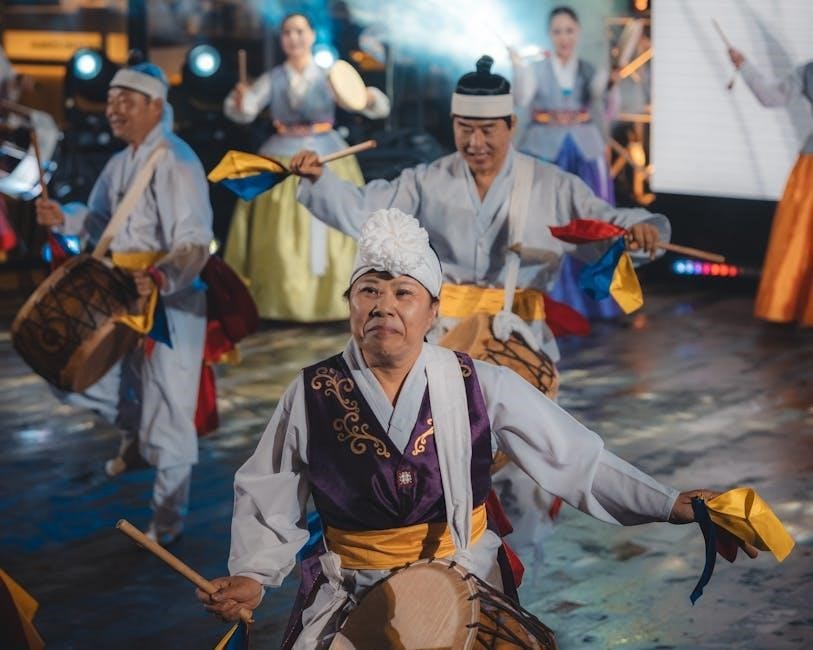
Digital access via PDF format has significantly increased the work’s accessibility for orchestras worldwide, fostering its continued performance and appreciation.
Arrangements for Wind Ensemble
Recognizing the widespread popularity of wind ensembles, Variations on a Korean Folk Song has been expertly adapted for this instrumentation.

These arrangements maintain the musical integrity of Chance’s original composition while tailoring it to the unique capabilities of the wind band.
PDF versions of these wind ensemble scores are easily obtainable from online resources like MuseScore.com, alongside commercial sheet music vendors.
The adaptation allows for a vibrant and powerful performance, showcasing the blend of woodwind, brass, and percussion sections.
These arrangements often prove particularly accessible to high school and collegiate wind ensembles, offering a challenging yet rewarding repertoire piece.
The wind ensemble version retains the melodic beauty and harmonic richness of the original orchestral work, appealing to a broad audience.
The availability of digital PDF scores further promotes the piece’s accessibility and encourages its performance by wind groups globally.
Adaptations for Smaller Ensembles (Trombone, Tuba, Flute, etc.)
Beyond the orchestral and wind ensemble settings, Variations on a Korean Folk Song boasts numerous adaptations for smaller instrumental groupings.
These arrangements cater to diverse ensemble configurations, including combinations featuring trombone, tuba, flute, oboe, and other instruments.

PDF sheet music for these smaller ensembles is readily available on platforms like MuseScore.com, offering flexibility for performers.
These adaptations often focus on highlighting specific melodic lines or harmonic textures, creating intimate and engaging performances.
Such arrangements are ideal for chamber music settings, student recitals, or pedagogical purposes, broadening the piece’s reach.
The availability of these varied arrangements demonstrates the enduring appeal and adaptability of Chance’s composition.
Accessing these PDF scores allows musicians to explore the work’s beauty in a more focused and personalized manner, fostering musical creativity.

Availability of Sheet Music (PDF)
PDF scores of John Barnes Chance’s work are widely accessible online, notably through MuseScore.com and retailers like Sheet Music Plus.
Both free and paid options exist, offering varied arrangements for diverse instrumentation and skill levels.
MuseScore.com as a Source
MuseScore.com stands as a prominent platform for accessing Variations on a Korean Folk Song sheet music in PDF format. The website boasts a substantial collection of user-submitted arrangements, offering options for various instruments including piano, guitar, flute, trombone, tuba, and oboe.
A significant advantage of MuseScore.com is the availability of free sheet music. Users can download and print scores contributed by a global community of musicians, composers, and arrangers. These contributions often include arrangements tailored for different ensemble sizes, from solo performances to full symphony orchestra.
The platform facilitates easy sharing and discovery of music, allowing performers to find suitable arrangements quickly. Scores are often available in both PDF and MIDI formats, catering to different preferences. However, it’s important to note that the quality of arrangements can vary, as they are created by individual users. The site’s search functionality and user ratings can help identify reliable and well-regarded scores of John Barnes Chance’s composition.
Sheet Music Plus and Other Retailers

Beyond MuseScore.com’s free offerings, commercial retailers like Sheet Music Plus provide access to Variations on a Korean Folk Song sheet music in PDF format. Sheet Music Plus typically offers professionally arranged scores, ensuring higher quality and accuracy compared to some user-submitted arrangements.
These retailers often feature arrangements specifically for Bb Clarinet and full orchestra, graded at a level 4 difficulty, suitable for advanced high school and collegiate ensembles. Purchasing from these sources supports composers and arrangers, contributing to the continued creation of musical resources.
Other online music stores and physical retailers may also carry the piece. While generally requiring a purchase, these options often provide more reliable and standardized editions. The cost varies depending on the instrumentation and arrangement complexity. Searching online using keywords like “John Barnes Chance Variations Korean Folk Song sheet music” will reveal a range of available options and pricing.
Free vs. Paid Sheet Music Options
When seeking Variations on a Korean Folk Song in PDF format, a clear distinction exists between free and paid resources. MuseScore.com stands out as a primary source for free sheet music, offering numerous user-submitted arrangements for various instruments like trombone, tuba, flute, and oboe.
However, the quality of free arrangements can vary significantly. Paid options, available through retailers like Sheet Music Plus, generally provide professionally engraved and edited scores, ensuring accuracy and clarity. These often include full orchestral arrangements and specific instrumental parts.
Choosing between free and paid depends on your needs and budget. Free options are excellent for casual practice or exploring the piece, while paid versions are recommended for serious performance and study. Consider the arrangement’s quality and the publisher’s reputation before making a decision.

Performance Considerations
Chance’s variations demand technical precision and musical sensitivity from performers, requiring careful attention to phrasing and dynamic contrasts.
Ensemble suitability varies; grading levels suggest appropriate skill sets for successful and expressive interpretations of the PDF score.
Technical Challenges for Performers
John Barnes Chance’s Variations on a Korean Folk Song, often accessed as a PDF, presents significant technical hurdles for performers across all instrumental lines. The rapid passagework, particularly in the variations themselves, demands exceptional finger dexterity and breath control.
Precise articulation and rhythmic accuracy are crucial, as the composer utilizes complex rhythmic figures and syncopation. Maintaining clarity amidst these complexities requires diligent practice and a strong understanding of the score.
Furthermore, the piece’s dynamic range – from delicate pianissimo passages to powerful fortissimo outbursts – necessitates a nuanced control of tone and volume. Ensemble coordination is paramount, especially during the more intricate contrapuntal sections.
Players must navigate challenging key signatures and quickly shifting harmonic landscapes, demanding a solid foundation in music theory and a keen ear for intonation. Successfully executing these technical demands unlocks the expressive potential of this captivating work.
Interpretive Approaches
Approaching John Barnes Chance’s Variations on a Korean Folk Song, often studied via PDF scores, requires balancing respect for the original folk melody with the composer’s inventive variations. Performers can emphasize the lyrical qualities of the theme, allowing its inherent beauty to shine through.
Alternatively, a more dramatic interpretation can highlight the contrasting characters of each variation, emphasizing the composer’s virtuosic writing and harmonic explorations. Understanding the cultural context of the Korean folk song can inform a sensitive and nuanced performance.
Ensemble leaders should encourage players to explore the emotional depth of the piece, conveying a sense of storytelling through dynamic shaping and phrasing. Balancing clarity of articulation with expressive freedom is key.
Ultimately, a successful interpretation captures both the playful spirit and the underlying emotional resonance of Chance’s masterful work.
Grading Level and Suitability for Ensembles
John Barnes Chance’s Variations on a Korean Folk Song, frequently accessed as a PDF, is generally considered a Grade 4 composition, making it suitable for advanced high school and collegiate ensembles. The piece demands technical proficiency from all players, particularly in areas of rhythmic precision and dynamic control.
Wind ensembles are a particularly strong fit, given the composer’s idiomatic writing for wind instruments. However, orchestral arrangements broaden its accessibility. Smaller ensembles, utilizing arrangements for trombone, tuba, or flute, can also tackle the work with careful adaptation.
Directors should assess their ensemble’s capabilities honestly before selecting this piece. Strong leadership and dedicated rehearsal time are crucial for a successful performance. The complexity requires a mature ensemble capable of independent learning.