iliotibial band it band stretches pdf
Understanding Iliotibial (IT) Band Syndrome
Iliotibial band syndrome (ITBS) arises from IT band irritation, often near the knee, impacting athletes and active individuals with repetitive motions.

What is the Iliotibial Band?
The iliotibial (IT) band is a thick band of fibrous tissue that runs along the outside of the thigh, extending from the hip to just below the knee. It’s not actually a muscle, but a strong connective tissue crucial for stabilizing the knee during running and other activities.
Essentially, it functions to prevent the knee from bending inward excessively. While often perceived as needing extensive stretching, the IT band itself doesn’t significantly lengthen; attempts to stretch it primarily target surrounding muscles. Inflammation occurs where the IT band rubs against the lateral femoral condyle, causing IT band syndrome. Understanding its structure is key to addressing related pain and implementing effective rehabilitation strategies.
Anatomy and Function of the IT Band
The IT band originates at the iliac crest of the hip, extending down the thigh to attach near the knee. Composed of dense connective tissue, it encases the vastus lateralis muscle. Its primary function isn’t to move the knee directly, but to stabilize it during movement, particularly preventing excessive inward knee motion during weight-bearing activities like running.
It also plays a role in hip abduction and external rotation. The band’s distal portion, near the knee, is where friction and irritation commonly occur, leading to IT band syndrome. A bursa typically lies underneath, reducing friction, but can become inflamed. Understanding this anatomy clarifies why specific exercises and stretches target surrounding muscles rather than the band itself.
Causes of IT Band Syndrome
IT band syndrome typically develops from repetitive friction as the IT band rubs against the lateral femoral epicondyle during activities like running, cycling, or hiking. Overuse and repetitive movements are primary contributors, especially when training intensity or duration increases rapidly.
Biomechanical factors also play a significant role. Leg length discrepancy can alter gait mechanics, increasing stress on the IT band. Similarly, foot pronation (inward rolling of the foot) can cause internal rotation of the leg, exacerbating friction. Weak hip abductors and gluteal muscles contribute to poor form and increased strain. Addressing these underlying biomechanical issues is crucial for effective prevention and treatment.
Overuse and Repetitive Movements
The core driver of IT band syndrome is frequently overuse, stemming from a sudden increase in training volume or intensity. Activities involving repeated knee flexion and extension, like long-distance running, cycling, or stair climbing, place significant stress on the IT band.
Repetitive movements without adequate rest or cross-training can lead to micro-trauma and inflammation within the IT band and surrounding tissues. Insufficient warm-up and cool-down routines further contribute to this process. Individuals returning to activity after a period of inactivity are particularly vulnerable. Proper pacing and gradual progression are essential to avoid overloading the IT band and triggering symptoms.
Biomechanical Factors (Leg Length Discrepancy, Foot Pronation)
Biomechanical imbalances significantly contribute to IT band syndrome development. A leg length discrepancy, even minor, can alter gait mechanics, increasing stress on the IT band. The body compensates, potentially leading to uneven loading and inflammation.
Foot pronation, the inward rolling of the foot, is another key factor. Excessive pronation can cause internal rotation of the tibia, increasing tension on the IT band as it crosses the knee. Orthotics can help correct pronation and improve alignment. Addressing these underlying biomechanical issues is crucial for effective ITBS management, alongside stretching and strengthening exercises, to restore optimal movement patterns.
Symptoms of IT Band Syndrome
IT band syndrome typically presents as pain on the outer knee, worsening with activity, and sometimes radiating up the thigh, causing discomfort.
Pain Location and Characteristics
The hallmark of IT band syndrome is pain located on the outside of the knee, specifically over the lateral femoral condyle – the bony prominence on the outer part of the thigh. This pain often begins gradually during activity, rather than from a specific injury. Initially, it might be a mild ache, but it can intensify to a sharp, burning sensation as activity continues.
Pain may radiate up the outer thigh, sometimes extending as far as the hip. It’s frequently aggravated by running, cycling, or stair climbing. A key characteristic is that the pain often diminishes with rest. Some individuals experience a snapping sensation as the IT band rubs over the condyle. The intensity varies, and the location can be pinpointed or more diffuse, depending on the stage and severity of the condition.
Common Activities that Aggravate ITBS
Several activities commonly exacerbate IT band syndrome due to the repetitive friction and stress placed on the IT band. Running, particularly long-distance running, downhill running, and running on banked surfaces, is a frequent trigger. Cycling, especially with improper bike fit or high resistance, can also contribute. Activities involving repeated knee bending, like stair climbing or squats, often worsen symptoms.

Other aggravating factors include sports with lateral movements, such as tennis or basketball. Even prolonged walking can provoke pain in some cases. The key is repetitive flexion and extension of the knee combined with the band’s friction against the femoral condyle. Identifying and modifying these activities is crucial for managing ITBS.

IT Band Stretches & Exercises
Effective management involves targeted stretches and strengthening exercises to improve flexibility, reduce friction, and support the surrounding musculature for relief.

Static IT Band Stretches
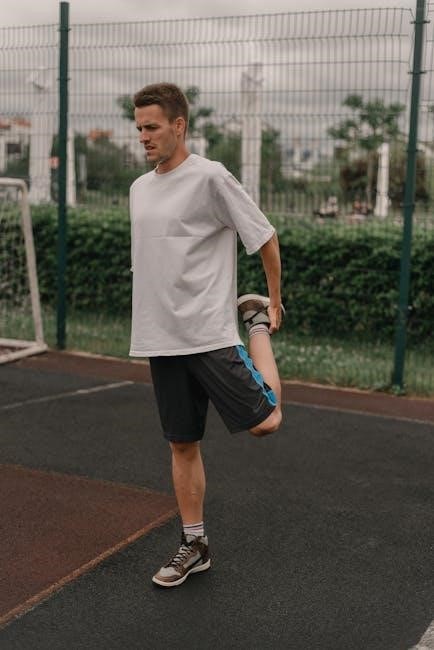
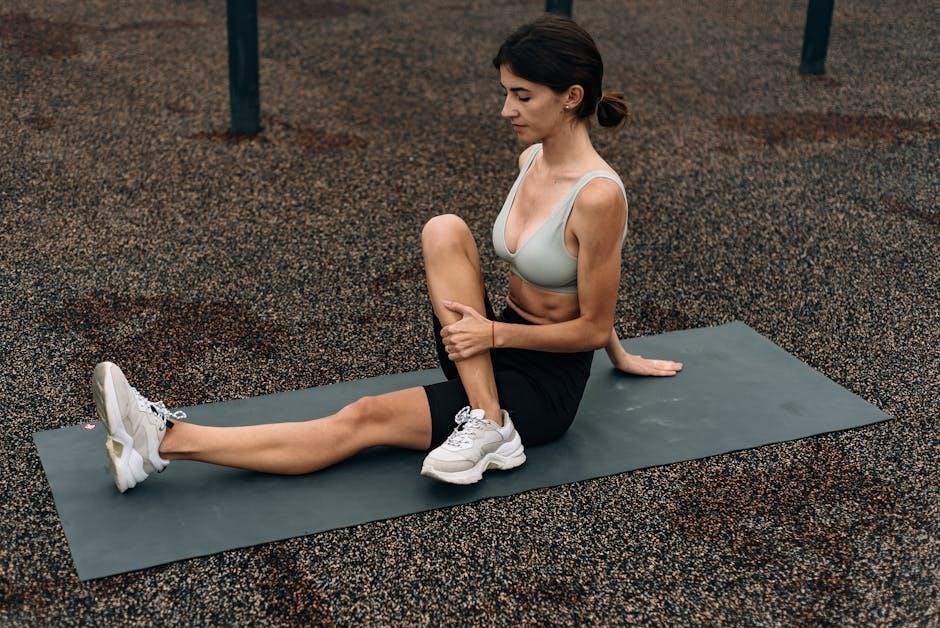
Static stretches are held for a period, improving IT band flexibility and reducing tension. The Standing IT Band Stretch (Side-Leaning) involves leaning against a wall, crossing one leg behind the other, and gently pushing hips inward, holding for 15-30 seconds. Repeat on both sides three times.
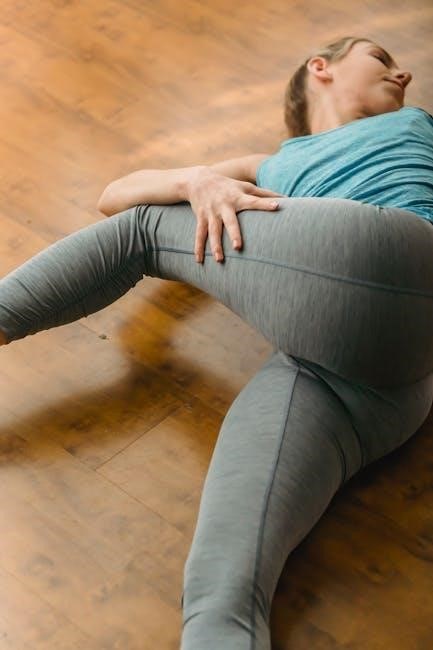
Another beneficial stretch is the Supine IT Band Stretch. Lie on your back with one leg extended and the other bent across your body. Gently pull the bent knee towards your chest, feeling a stretch along the outside of the extended leg. Hold for 20-30 seconds and repeat several times on each side. These stretches should be performed gently, avoiding any sharp pain, and can be incorporated into a daily routine.
Standing IT Band Stretch (Side-Leaning)
To perform this stretch, stand sideways near a wall for support. Position one hand on the wall, maintaining a stable base. Cross the leg furthest from the wall over the other leg, ensuring the foot closest to the wall remains flat on the floor. This positioning is crucial for targeting the IT band effectively.
Gently lean your hips towards the wall, feeling a stretch along the outer thigh of the leg that’s crossed behind. Hold this stretch for approximately 15-30 seconds, focusing on deep, controlled breathing. Repeat the stretch three times on each leg, ensuring consistent form. This stretch helps lengthen the IT band and alleviate tension.
Supine IT Band Stretch
Lie on your side with your bottom leg straight and your top leg bent over the front. Reach across your body with the top hand and gently pull your knee towards your chest. Simultaneously, extend your top arm overhead towards the floor, creating a diagonal stretch.
Focus on feeling the stretch along the outer thigh of your bottom leg – this is where the IT band is located. Hold this position for 20-30 seconds, breathing deeply and consistently. Repeat this stretch 2-3 times on each side. Modifications include using a strap to assist in pulling the knee closer if needed, enhancing the stretch’s effectiveness.
Dynamic IT Band Stretches
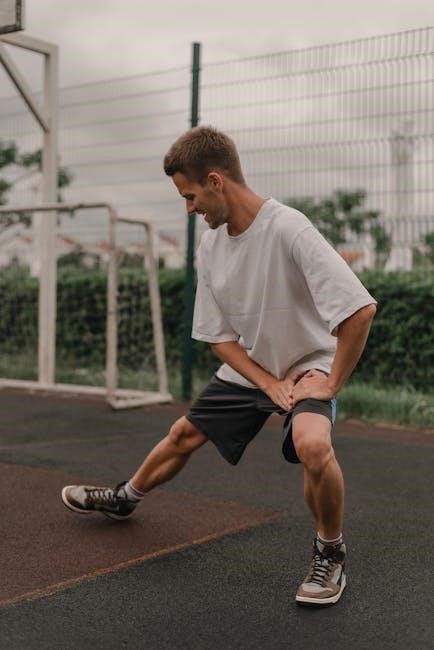
Dynamic stretches prepare the IT band for activity, improving flexibility and range of motion. Unlike static stretches, these involve controlled movements. Leg Swings involve standing tall and swinging one leg forward and backward, then side to side, focusing on controlled motion, not maximum reach. Perform 10-15 swings per leg.
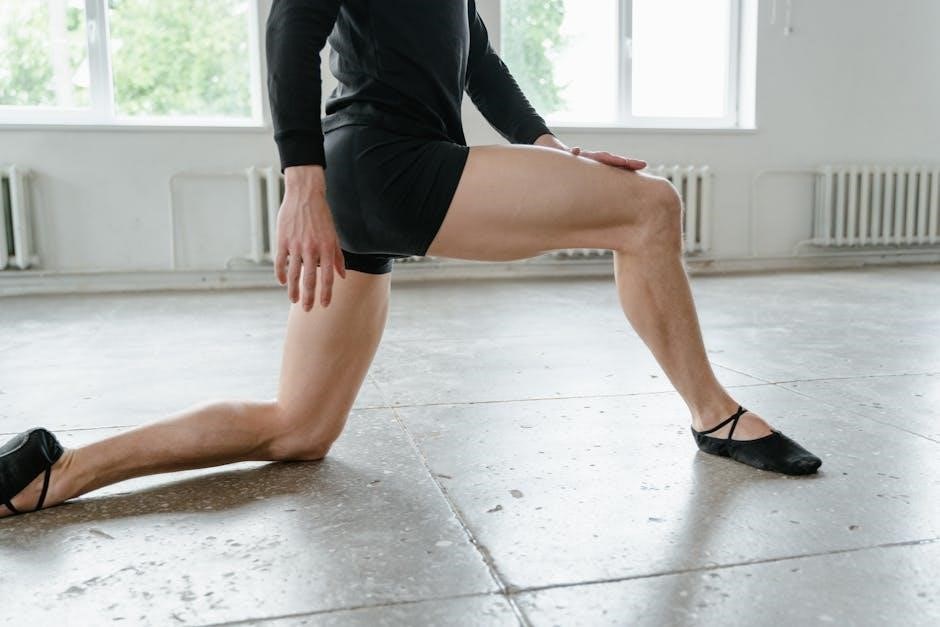
Walking Lunges with IT Band Focus require stepping forward into a lunge, keeping the torso upright and gently pushing the hips slightly to the side during each lunge. This targets the IT band. Complete 10-12 lunges per leg. These movements enhance blood flow and prepare the tissues for exertion, reducing injury risk.
Leg Swings
Leg swings are a fantastic dynamic stretch for warming up the IT band and surrounding muscles. Begin by standing tall, holding onto a wall or stable object for balance if needed. Swing one leg forward and backward in a controlled motion, keeping your core engaged and back straight. Focus on a comfortable range of motion, avoiding any sharp pain.
Repeat this 10-15 times per leg. Then, switch to side-to-side swings, moving your leg across your body and back. This targets different fibers of the IT band. Remember, the goal isn’t maximum reach, but controlled, fluid movement to increase blood flow and prepare the muscles for activity.

Walking Lunges with IT Band Focus
Walking lunges, modified to emphasize IT band stretching, are excellent for dynamic flexibility. Step forward into a lunge, ensuring your front knee stays aligned over your ankle. As you lunge, gently push your hips slightly to the side of the front leg, creating a stretch along the outer thigh – this is the IT band focus.
Maintain a straight back and engaged core throughout the movement. Alternate legs with each step, continuing for 10-15 lunges per leg. The key is a controlled, deliberate hip push, not a deep lunge. This targets the IT band while simultaneously strengthening leg muscles, promoting stability and reducing injury risk.
Strengthening Exercises for ITBS
Strengthening the muscles surrounding the hip and knee is crucial for addressing IT band syndrome. Weakness in these areas contributes to altered biomechanics, exacerbating IT band stress. Focus on exercises targeting the gluteus maximus and hip abductors, key stabilizers during movement.
Strong glutes help control hip motion, preventing excessive internal rotation that can tighten the IT band. Hip abductors maintain pelvic stability, reducing strain on the band. Consistent strengthening, alongside stretching, is vital for long-term recovery and preventing recurrence of ITBS. Prioritize proper form over weight or repetitions.
Gluteus Maximus Strengthening
Strengthening the gluteus maximus is paramount in IT band syndrome rehabilitation. Exercises like glute bridges effectively target this muscle, improving hip extension and external rotation. Begin by lying on your back with knees bent and feet flat, then lift your hips off the ground, squeezing your glutes at the top.
Progress to single-leg glute bridges for increased challenge. Another effective exercise is hip thrusts, utilizing a bench for greater range of motion. Consistent gluteus maximus strengthening helps stabilize the pelvis, reducing stress on the IT band during activities. Focus on controlled movements and proper form to maximize effectiveness and prevent injury.
Hip Abductor Strengthening
Strengthening hip abductors, such as the gluteus medius and minimus, is crucial for stabilizing the pelvis and controlling leg movement during activities. Side-lying leg raises are an excellent starting point; lie on your side and lift your top leg, keeping your core engaged.
Clamshells, performed with a resistance band around the knees, further target these muscles. Focus on maintaining proper form – avoid rotating your torso. Band walks, stepping sideways with a resistance band around your ankles, also effectively strengthen hip abductors. These exercises help prevent excessive hip adduction, a common contributor to IT band stress and subsequent syndrome development.
Rehabilitation Protocol & Recovery
Recovery involves a phased approach: reducing inflammation, restoring motion, and progressively strengthening muscles to support the IT band and prevent recurrence.
Phase 1: Reducing Inflammation & Pain
The initial phase focuses on alleviating pain and minimizing inflammation surrounding the iliotibial band. This typically involves a period of relative rest, modifying activities that aggravate symptoms, and employing conservative treatments. Applying ice packs to the affected area for 15-20 minutes several times a day can significantly reduce inflammation.
Over-the-counter pain medications, such as ibuprofen or naproxen, may also be used to manage discomfort, but should be taken as directed. Gentle range-of-motion exercises, avoiding those that provoke pain, are encouraged to prevent stiffness. Focus is on protecting the area and establishing a baseline for progression. Early intervention with these strategies is crucial for a successful recovery.
Phase 2: Restoring Range of Motion & Flexibility
Once initial pain and inflammation subside, the focus shifts to regaining full range of motion and flexibility in the lower limb. This phase incorporates specific stretching exercises targeting the iliotibial band, hip flexors, and surrounding musculature. The standing IT band stretch, involving a side-leaning posture against a wall, is beneficial.
A supine IT band stretch, performed while lying on your back, can also improve flexibility. Gentle myofascial release techniques, using a foam roller, may be introduced to address tissue restrictions. Stretching should be performed slowly and controlled, avoiding any sharp pain. Consistent stretching is vital for restoring optimal biomechanics and preventing recurrence.
Phase 3: Strengthening & Functional Training
This phase concentrates on strengthening the muscles surrounding the hip and knee to enhance stability and control. Gluteus maximus and hip abductor strengthening exercises are crucial, as weakness in these areas contributes to ITBS. Functional training incorporates movements mimicking the activities that previously aggravated the condition.
Walking lunges, performed with a focus on maintaining proper alignment, help rebuild strength and endurance. Progressive loading is essential, gradually increasing the intensity and duration of exercises. Proprioceptive exercises, improving balance and coordination, are also beneficial. A return to activity should be gradual, monitoring for any recurrence of symptoms.
Preventing IT Band Syndrome
Consistent warm-ups, proper footwear, and addressing biomechanical issues like leg length discrepancies are vital for preventing IT band irritation and pain.
Proper Warm-up and Cool-down
A comprehensive warm-up prepares muscles for activity, increasing blood flow and flexibility, crucial for IT band health. Dynamic stretches, like leg swings, are beneficial before exercise, enhancing range of motion. Prioritize movements that mimic the intended activity, gradually increasing intensity.
Cool-downs are equally important, aiding in muscle recovery and reducing stiffness. Static stretches, holding each position for 15-30 seconds, can improve IT band flexibility post-exercise. The side-leaning IT band stretch, utilizing wall support, is particularly effective. Consistent warm-up and cool-down routines minimize IT band stress, reducing the risk of inflammation and syndrome development. Remember to listen to your body and avoid pushing through pain.
Appropriate Footwear and Orthotics
Footwear plays a significant role in IT band syndrome prevention by influencing biomechanics. Shoes with adequate cushioning and support can minimize stress on the lower limbs. Consider your foot type – neutral, pronated, or supinated – when selecting shoes. Overpronation, a common factor, can exacerbate IT band issues.
Orthotics, custom or over-the-counter, can correct foot alignment and reduce excessive pronation. They provide arch support, distributing weight more evenly and decreasing strain on the IT band. Consulting a podiatrist or physical therapist is recommended to determine if orthotics are appropriate for your specific needs. Proper footwear and orthotics contribute to optimal biomechanics, lessening the risk of IT band irritation and syndrome development.