bosch 500 series dryer manual

Bosch 500 Series Dryer Manual: Comprehensive Guide
This comprehensive guide details the Bosch 500 Series dryer, covering features, operation, maintenance, and troubleshooting—ensuring optimal performance and longevity.
Understanding Your Bosch 500 Series Dryer Model
The Bosch 500 Series dryer represents a blend of German engineering and practical laundry solutions. These models, like the WTG86401UC and WTMC3321US, are designed for efficient and gentle fabric care. Key features include condensation drying, a variety of specialized cycles, and user-friendly controls.
Understanding your specific model within the 500 Series is crucial. Variations exist in program offerings and control panel layouts. The 500 Series boasts a 7.7 kg (17 lbs) capacity, suitable for typical household loads. Certification from organizations like CE, CSA, UL, and VDE underscores its commitment to safety and quality. Familiarizing yourself with these aspects will maximize your drying experience.
Locating the Model Number (E-Nr)
Finding your Bosch dryer’s model number, designated as “E-Nr,” is essential for accessing the correct documentation and support. This unique identifier allows you to download the specific owner’s manual tailored to your appliance. The E-Nr is typically located on the appliance’s rating plate.
This plate is usually found inside the dryer door, around the door opening, or on the back of the unit. It’s a sticker containing various technical details, including the E-Nr. You can also use the camera icon on the Bosch support website to automatically detect the model number from a clear photo of the rating plate. Having this number readily available streamlines troubleshooting and service requests;
Accessing the Official Bosch Owner’s Manual
Obtaining the official Bosch owner’s manual for your 500 Series dryer is straightforward and provides detailed guidance on operation and maintenance. Bosch provides access to manuals through their official website. Navigate to the support section and search for owner’s manuals or spec sheets.
You’ll be prompted to enter your appliance’s model number (E-Nr) to locate the correct document. Alternatively, utilize the mobile app feature to photograph the rating plate for automatic identification. Downloading the PDF manual allows offline access to crucial information, including safety precautions, cycle explanations, and troubleshooting tips. Ensure you have the latest version for accurate guidance.
Safety Precautions and Warnings
Prioritizing safety is paramount when operating your Bosch 500 Series dryer. Always ensure the dryer is properly grounded to prevent electrical shock. Never operate the dryer if it’s damaged, particularly the power cord or plug. Disconnect the dryer from the power supply before cleaning or performing maintenance.
Avoid drying items that have been exposed to flammable substances like gasoline or cleaning solvents. Do not allow children to operate the dryer unsupervised. Regularly inspect the lint filter and exhaust duct to prevent fire hazards. Follow all warnings outlined in the owner’s manual to ensure safe and reliable operation.
Dryer Features and Controls Overview
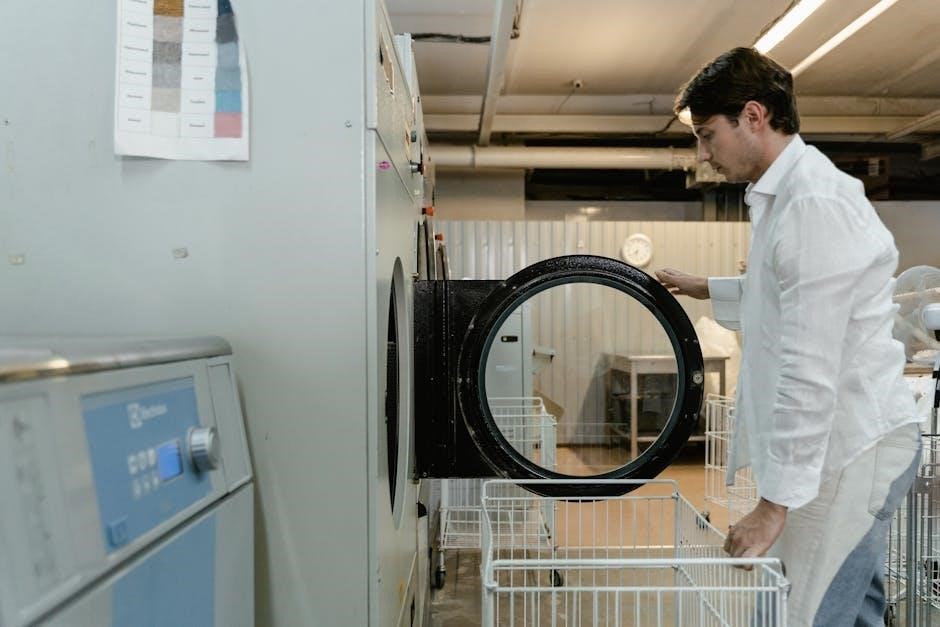
The Bosch 500 Series dryer boasts a range of features designed for optimal garment care. It’s a condensation dryer, eliminating the need for external venting. Key features include a 28-liter stainless steel drum, ensuring durability and gentle fabric handling. Controls are a blend of rotary dial and touch functionality, providing intuitive operation.
The dryer offers 15 distinct drying programs, catering to diverse fabric types and needs. An LED display clearly indicates cycle status and remaining time. Safety features and certifications like CE, CSA, UL, and VDE demonstrate a commitment to quality and user well-being.
Control Panel Explanation (Rotary & Touch Controls)
The Bosch 500 Series dryer utilizes a user-friendly control panel combining a rotary dial and touch controls. The rotary dial primarily selects drying programs – Normal, Delicate, Bulky, and Time Dry are accessible here. Touch controls refine settings within each program, allowing adjustments for dryness level and anti-wrinkle options.
The integrated LED display provides clear feedback on selected cycles, remaining time, and any active features. Dedicated touch buttons activate specialty functions like steam cycles (if equipped). This dual-control system offers both quick program selection and precise customization, enhancing the drying experience.
LED Display Indicators and Meanings
The Bosch 500 Series dryer’s LED display communicates crucial information during operation. A flashing “Start” icon indicates the cycle hasn’t begun; a solid icon confirms it’s running; Remaining time is prominently displayed, updating dynamically throughout the cycle. Indicators signal when the condenser unit needs cleaning or the lint filter requires attention.
Error codes, displayed as “E:xx”, pinpoint specific issues – consult the troubleshooting section for interpretations. A “Clean Condenser” alert prompts maintenance for optimal performance. The display also shows selected program and any activated options, like reduced crease or extra dry, ensuring informed operation.
Drying Programs: A Detailed Breakdown
The Bosch 500 Series dryer offers 15 distinct drying programs catering to diverse fabric types and needs. Standard cycles include “Normal” for everyday laundry, “Delicate” for sensitive items, and “Heavy Duty” for robust fabrics. Specialty programs encompass “Bulky” for bedding, “Time Dry” for customized durations, and “Air Refresh” for gentle revitalization.
Steam functions, if equipped, provide wrinkle reduction and odor elimination. Sensor drying automatically adjusts time based on moisture levels, preventing over-drying. Each program features adjustable settings for dryness level and temperature, offering personalized control. Refer to the control panel explanation for specific program details.
Standard Drying Cycles (e.g., Normal, Delicate)
The “Normal” cycle is designed for everyday cotton and linen items, utilizing medium heat and automatic dryness control. The “Delicate” cycle employs low heat and a gentler tumble action, ideal for lingerie, silk, and other fragile fabrics. A “Permanent Press” cycle minimizes wrinkles in synthetic blends, while the “Heavy Duty” cycle tackles durable items like towels and jeans with high heat.
These cycles offer adjustable dryness levels – damp, less dry, medium, and more dry – allowing customization. Always check garment care labels before selecting a cycle. Proper sorting ensures optimal drying and prevents damage.
Specialty Drying Cycles (e.g., Bulky, Time Dry)
The “Bulky” cycle accommodates larger items like comforters and blankets, utilizing low heat and extended drying times. “Time Dry” allows manual setting of drying duration, useful for items needing precise control or for refreshing clothes without heat. An “Air Fluff” cycle gently tumbles items without heat, ideal for fluffing pillows or delicate fabrics.

The Bosch 500 Series also features a “Sanitize” cycle, employing high heat to eliminate bacteria and allergens. Remember to check garment labels before using specialty cycles. Proper loading is crucial for optimal performance.
Steam Functions (If Applicable)
Certain Bosch 500 Series dryer models incorporate steam functions designed to refresh and de-wrinkle clothes with minimal effort. The “Steam Refresh” cycle gently steams garments, reducing odors and light wrinkles in approximately 20-30 minutes—ideal for lightly worn items. A “Steam Delicate” cycle offers a gentler steam treatment for sensitive fabrics.

These steam cycles utilize minimal heat, preventing damage to delicate materials. Always ensure the water reservoir is filled before using steam functions. Refer to your specific model’s manual for detailed instructions and safety precautions regarding steam operation.
Loading and Unloading the Dryer
Proper loading and unloading techniques are crucial for optimal drying performance and garment care. Always ensure the dryer drum is empty before loading. Distribute items evenly to maintain balance and prevent excessive wrinkling. Avoid overloading, respecting the maximum load capacity of 7.7 kg (17 lbs) to ensure efficient drying.
Remove lint and debris from clothing before loading. After the cycle completes, promptly remove items to prevent wrinkles. Check pockets for any remaining objects. Gently shake out garments before folding or hanging to minimize creases.
Maximum Load Capacity (7.7 kg / 17 lbs)
Understanding the maximum load capacity is vital for efficient drying and preventing damage to your Bosch 500 Series dryer. This model boasts a 7.7 kg (17 lbs) capacity, representing the weight of dry laundry it can effectively handle in a single cycle. Exceeding this limit can lead to unbalanced loads, reduced drying performance, and potential wear and tear on the machine.
Consider the bulkiness of items; a load of heavy towels will weigh more than a similar volume of lightweight shirts; Always distribute items evenly within the drum. Refer to garment care labels for specific drying recommendations.
Proper Garment Preparation
Preparing garments correctly before drying extends their lifespan and ensures optimal dryer performance. Always check care labels for specific instructions; some items may require air drying. Secure loose buttons, close zippers, and empty pockets to prevent damage to both the clothes and the dryer.
Delicate items should be placed in a mesh laundry bag for added protection. Untangle clothing to allow for even air circulation. Avoid overloading the dryer, as this restricts airflow and can lead to wrinkles. Pre-treating stains before drying is recommended, as heat can set them permanently.
Maintenance and Cleaning
Regular maintenance ensures your Bosch 500 Series dryer operates efficiently and reliably. Crucially, clean the condenser unit periodically to maintain optimal drying performance; a clogged condenser reduces efficiency. The lint filter must be cleaned after every load to prevent fire hazards and maintain airflow.
Periodically clean the dryer drum with a damp cloth and mild detergent to remove residue. Inspect the door seal for damage and clean it as needed. Avoid using abrasive cleaners, as they can damage surfaces. Following these steps will prolong the dryer’s lifespan.
Cleaning the Condenser Unit

The Bosch 500 Series dryer’s condenser unit requires regular cleaning for optimal performance. A clogged condenser significantly reduces drying efficiency and increases energy consumption. Locate the condenser unit – typically at the base of the dryer, accessible via a panel. Remove any accumulated lint and debris using a vacuum cleaner with a brush attachment.
Rinse the condenser under cool, running water, ensuring all lint is removed. Allow it to dry completely before reinstalling. Cleaning frequency depends on usage, but every few months is recommended.
Lint Filter Cleaning and Replacement
Maintaining a clean lint filter is crucial for your Bosch 500 Series dryer’s efficiency and safety. Locate the lint filter, usually inside the dryer door or within the lint compartment. After each drying cycle, remove the filter and thoroughly clean it by hand, removing all accumulated lint.

Periodically, wash the lint filter with warm water and mild detergent to remove any residue buildup. Inspect the filter for damage; a torn or damaged filter should be replaced immediately to prevent lint from entering the dryer’s internal components.
Drum Cleaning Recommendations
To keep your Bosch 500 Series dryer performing optimally, regular drum cleaning is essential. Use a commercially available dryer drum cleaner monthly, or create a solution of warm water and white vinegar. Run an empty cycle with a damp cloth inside the drum to loosen residue.
For stubborn buildup, use a non-abrasive cleaning pad to gently scrub the drum’s interior. Avoid harsh chemicals or abrasive cleaners, as they can damage the stainless steel. Always ensure the drum is completely dry before using the dryer again.
Troubleshooting Common Issues
Encountering issues with your Bosch 500 Series dryer? If the dryer won’t start, check the power cord and circuit breaker. For no-heat situations, verify the vent is clear and the heating element isn’t faulty. Error codes displayed on the LED panel indicate specific problems; consult the manual for their meanings.
A clogged lint filter is a frequent cause of reduced performance. Regularly cleaning it improves airflow. If issues persist, consult the official Bosch documentation or contact customer support for professional assistance.
Dryer Not Starting
If your Bosch 500 Series dryer fails to start, several factors could be at play. First, ensure the dryer is properly plugged into a functioning power outlet. Check your home’s circuit breaker or fuse box to confirm the circuit hasn’t tripped or blown. Verify the door is securely closed, as a safety mechanism prevents operation if it’s ajar.
Also, examine the control panel settings; ensure a drying cycle is selected and the ‘Start’ button has been pressed. If the problem continues, consult the owner’s manual for further troubleshooting steps or contact Bosch support.
Dryer Not Heating
If your Bosch 500 Series dryer isn’t heating, a few potential issues need investigation. Begin by checking the lint filter; a clogged filter restricts airflow and can cause overheating protection to activate, preventing heating. Inspect the vent hose for blockages – kinks or lint buildup significantly reduce efficiency.
A faulty heating element is a common cause, requiring professional diagnosis and replacement. Also, examine the thermal fuse and thermostat; these safety components can fail, interrupting the heating process. Refer to the owner’s manual or contact Bosch support for assistance.
Error Codes and Their Meanings
Bosch 500 Series dryers utilize error codes to signal specific malfunctions, aiding in diagnosis and repair. A common code, “E15”, often indicates a heating element issue or a problem with the temperature sensor. “E24” typically points to a blocked vent or airflow restriction, requiring vent cleaning.
“E07” suggests a communication error within the dryer’s internal systems. Consult your owner’s manual for a complete list of error codes and their corresponding solutions. If an error persists after attempting troubleshooting, contacting Bosch customer support is recommended for professional assistance.
Technical Specifications
The Bosch 500 Series dryer boasts a 28-liter drum volume, constructed from durable stainless steel for long-lasting reliability. Its dimensions vary slightly by model, but generally fall around 27 inches in width. Weight typically ranges between 120-130 pounds.
Energy consumption varies depending on the cycle selected, but the dryer is designed for efficiency. It operates on a standard 120V electrical supply. The dryer’s rated capacity is 7.7 kg (approximately 17 lbs). Certifications include CE, CSA, UL, and VDE, demonstrating adherence to stringent safety standards.
Drum Volume (28 Liters)
The Bosch 500 Series dryer features a spacious 28-liter drum, providing ample room for efficiently drying moderate-sized laundry loads. This generous capacity allows for better air circulation around garments, contributing to more even drying results and reduced creasing.
Constructed from high-quality stainless steel, the drum is designed for durability and resistance to wear and tear. This material choice also helps to minimize noise during operation. The 28-liter volume strikes a balance between capacity and energy efficiency, making it suitable for households of various sizes.
Dimensions and Weight
Understanding the physical specifications of your Bosch 500 Series dryer is crucial for proper installation and space planning. While specific dimensions can vary slightly between models (like WTG86401UC), generally, these dryers are designed to fit standard laundry room configurations.
Typical dimensions include a height of approximately 38 inches, a width of 24 inches, and a depth of around 24 inches. The dryer’s weight usually falls within the range of 120 to 140 pounds. Always consult your specific model’s documentation for precise measurements before purchasing or installing.
Energy Consumption Information
Understanding the energy usage of your Bosch 500 Series dryer is vital for efficient operation and cost savings. These dryers are designed with energy efficiency in mind, often exceeding minimum standards. However, actual consumption varies based on cycle selection, load size, and sensor drying features.
Typical energy consumption ranges from 200 to 300 kWh per year, but this is an estimate. Look for the Energy Star label on qualified models for verified efficiency ratings. Utilizing features like moisture sensors and appropriate cycle choices can significantly reduce energy waste and lower utility bills. Refer to the model’s energy guide for detailed information.